- Knowledge Centre

DownloadsProduct information sheets
NBS Source & RIBAExpertise and resources to provide specifiers
Cpd’s & TrainingContinuing Professional Development
Latest NewsExpertise and resources to provide specifiers
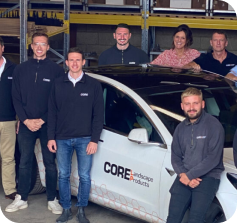
Meet the TeamThe faces behind the team at Core LP

TestimonialsRead all our testimonials from Trustpilot



Build Beautiful Spaces with our
Sustainable Landscaping Products.
CORE DRIVE
CORE PATH
CORE EDGE
CORE PRO EDGE
CORE GRASS
CORE TRP
Screens by CORE
CORE DRIVE
Gravel is one of the most attractive, economical and versatile surfaces on earth. But without help, it’s inclined to move around, creating ridges and ending up where it shouldn’t. We have the perfect solution. Our stabilising cellular grids create a naturally porous base into which gravel sits – and stays! It’s easy to lay, inexpensive and very, very attractive.
CORE PATH
A gravel stabilisation grid makes gravel suitable for wheelie bins, wheel barrows, pedestrians, bicycles and more! Our gravel path grid is very easy to install (see ‘Install Guide’ tab above for instructions) and is perfect for patios and garden paths.
CORE EDGE
Innovative, easy-to-install flexible steel garden edging system, suitable for edging lawns, borders, patios, pathways, and driveways.
Manufactured here in the UK from a high quality 1.6mm mild steel, available in three face heights and five finishes. Each pack of 5 x 1075mm strips joins together to give 5 meters of edging once installed.
CORE PRO EDGE
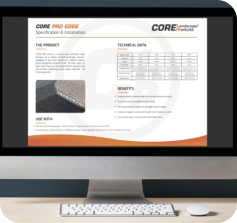
We use the same basic architectural, marine grade 6063 tempered aluminium alloy to create our Aluminium Landscape Edging as our major competitor Kinley, but we differ in appearance because we manufacture with a fully anodised finish which provides a harder wearing surface with greater scratch resistance and an attractive appearance.
CORE GRASS
We provide an extensive selection of grass reinforcement and protection solutions designed to prevent grass pathways or driveways from deteriorating into muddy surfaces. These products not only provide effective drainage but also enhance traction and grip for both pedestrians and vehicles.
CORE TRP
The CORE Tree Root Protection (TRP) System is a CE certified cellular confinement system that provides guaranteed protection for the roots of mature trees from pedestrian and vehicular traffic. It distributes the weight of the traffic which in turn prevents subsoil compaction around the roots.
SCREENS BY CORE
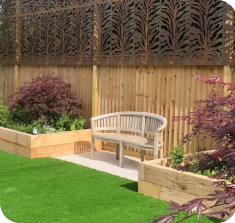
A wide range of decorative garden screens that have been carefully designed to the highest quality. From wood composite to cor ten steel, you can find the perfect screening solution to suit your space.
Proud to be a family run business with over 40 years experience in the industry.
CORE Landscape Products is proud to be a second generation family business since 1980. We specialise in the design, manufacture and supply of high quality eco-friendly products that are built to last and require minimal maintenance.
We are proud to say our products are manufactured in strict accordance with ISO 9001 and ISO 14001 standards. These standards are implemented from raw material acquisition to delivery of the finished article.
Each and every product is specifically designed to provide a long term solution and minimise the impact of construction on the environment. Where possible we source recycled materials to engineer our products, further reducing our carbon footprint.

Knowledge centre.
Learn more about our products with in-depth material data sheets and more from our knowledge centre. Access product information through our downloads, learn more about our construction and architectural products through NBS Source & RIBA, and access CPDs & Training.
Case studies.
Seeing our landscaping products in real life applications, brings out the full beauty of a property.
Awards & Accreditations.






Built to last with minimal maintenance.
Our products prioritise quality and value above all else, but one great benefit of our specially-designed landscaping products is their superb durability. Once installed, our products stand up to the elements and require minimal maintenance.
We are proud suppliers to brands across the globe.
Core LP has been a proud supplier to many well-known international brands, helping their properties stand out beautifully with our professional landscaping products and equipment.
















Copyright CORE 2024 Website design and marketing by Unity Online

